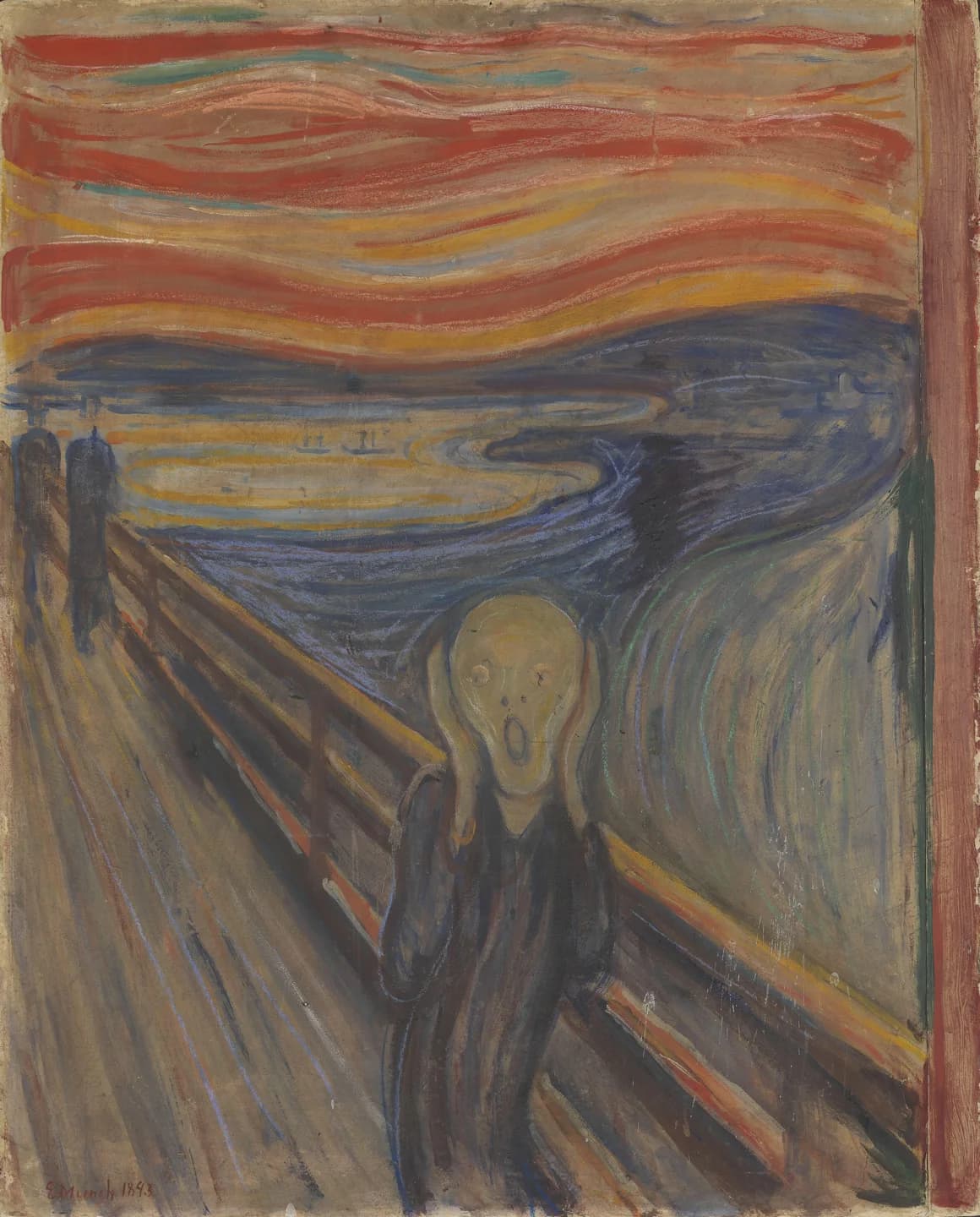
A pale face and raised hands echo the curves of water and sky. The straight railing cuts sharply across those flowing bands, creating a visual clash. Notice the distant figures on the path: their upright shapes make the foreground figure feel even more exposed.
The work in context
This is the 1893 version of The Scream in Norway’s National Museum. Munch returned to the motif in other versions and media, so it is helpful to identify which image you are viewing. The museum connects the work to his writing about an overwhelming experience in a landscape; the picture is more ambiguous than a simple illustration of someone shouting.
What to look for
The face, hands and distant water share curving outlines. Against them, the railing makes a firm diagonal toward two smaller figures. Warm bands across the sky intensify the cool dark areas below. The foreground figure seems integrated into the landscape’s movement while also isolated from the people on the path.
Discover it in your focus time
This work is part of the Dreams & symbols collection in Tempo Canvas for iPhone. As you finish focus sessions, artworks become part of your personal gallery. Use your break to revisit a detail, then put your phone aside for the next task.
New to this kind of break? Try our guide to slow looking or set up your first Pomodoro session on iPhone.
Source & looking notes
Collection reference: The National Museum, Norway — The Scream. Historical details and dates follow the linked collection record. The visual descriptions and observation prompts are original Tempo Canvas editorial interpretations.