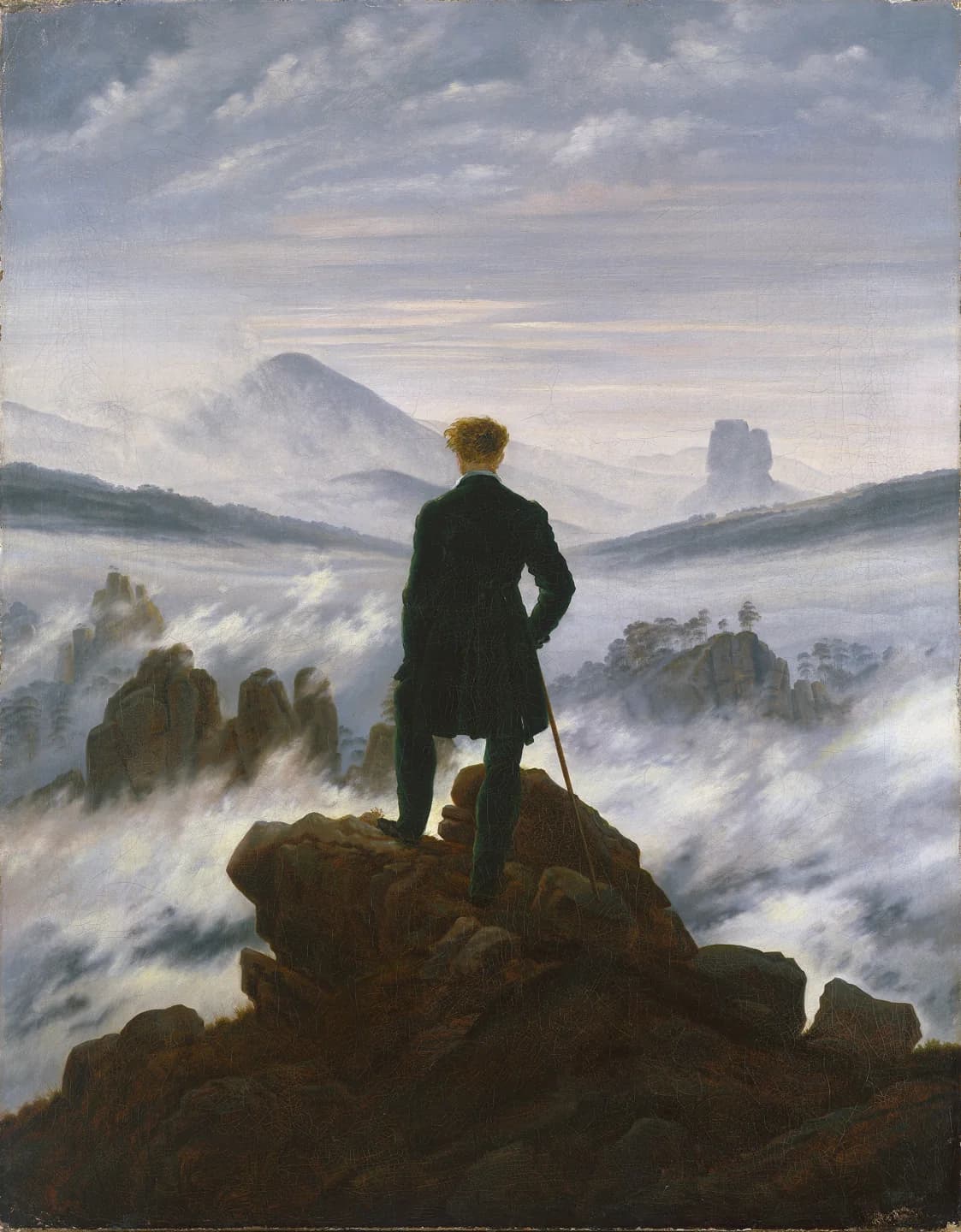
A figure faces away from us on a rocky summit above layers of mist. Because we cannot see his face, the landscape becomes the shared subject of attention. Follow the dark ridge in the foreground toward the distant peaks that fade into the sky.
The work in context
Friedrich’s Wanderer Above the Sea of Fog belongs to the Hamburger Kunsthalle, whose current collection information dates it to around 1817. It is also widely encountered with an 1818 date. The figure’s turned back is essential: we share the direction of his gaze without gaining access to his expression.
What to look for
The closest rocks have sharp, dark edges. Farther ridges become lighter and less definite, until mist seems to dissolve their outlines. The standing figure joins these layers without explaining them. His central position may suggest confidence, but the concealed ground also leaves uncertainty. Both responses can arise from the same arrangement of visible forms.
Discover it in your focus time
This work is part of the Romantic visions collection in Tempo Canvas for iPhone. As you finish focus sessions, artworks become part of your personal gallery. Use your break to revisit a detail, then put your phone aside for the next task.
New to this kind of break? Try our guide to slow looking or set up your first Pomodoro session on iPhone.
Source & looking notes
Collection reference: Hamburger Kunsthalle — Wanderer Above the Sea of Fog. Historical details and dates follow the linked collection record. The visual descriptions and observation prompts are original Tempo Canvas editorial interpretations.